Line Up / Shape Up in Newark: Clean Edges, Same Barber Every Time
Line Up and Shape Up: What’s Included
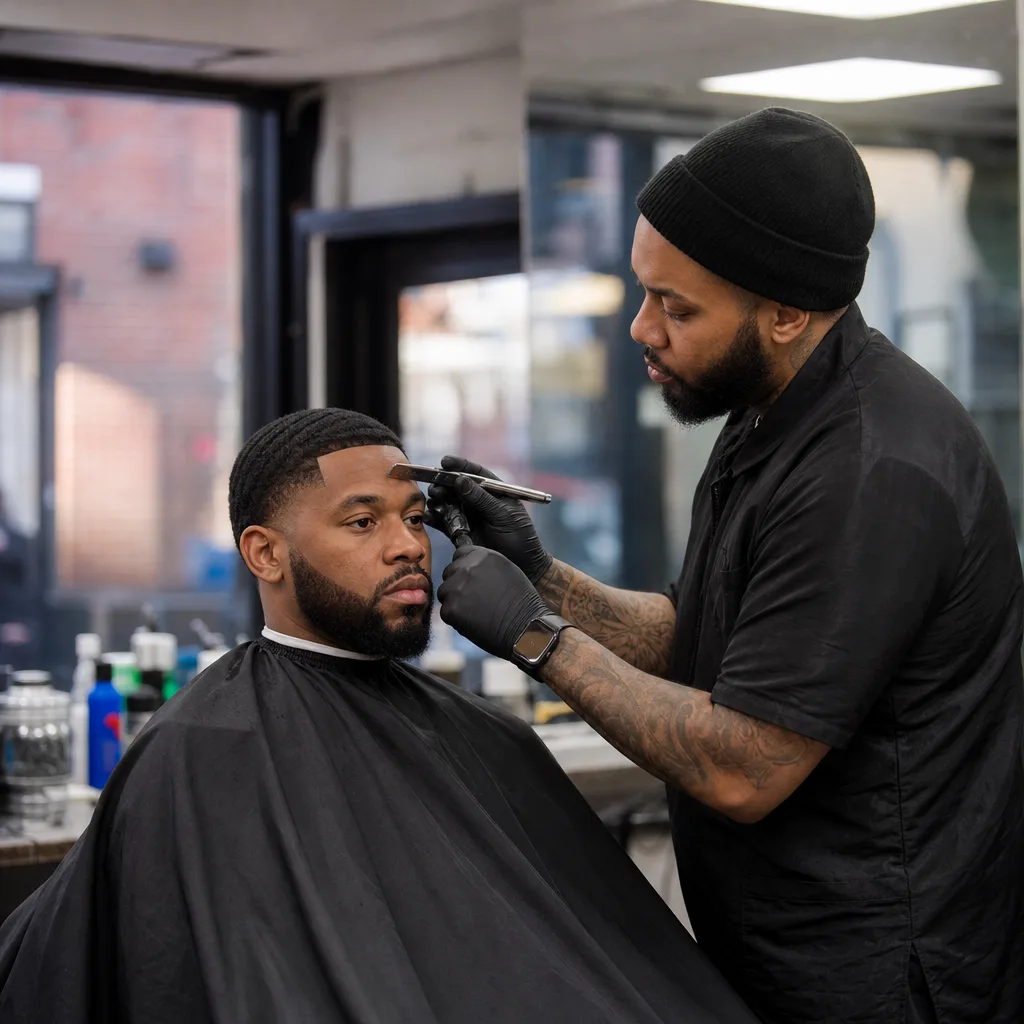
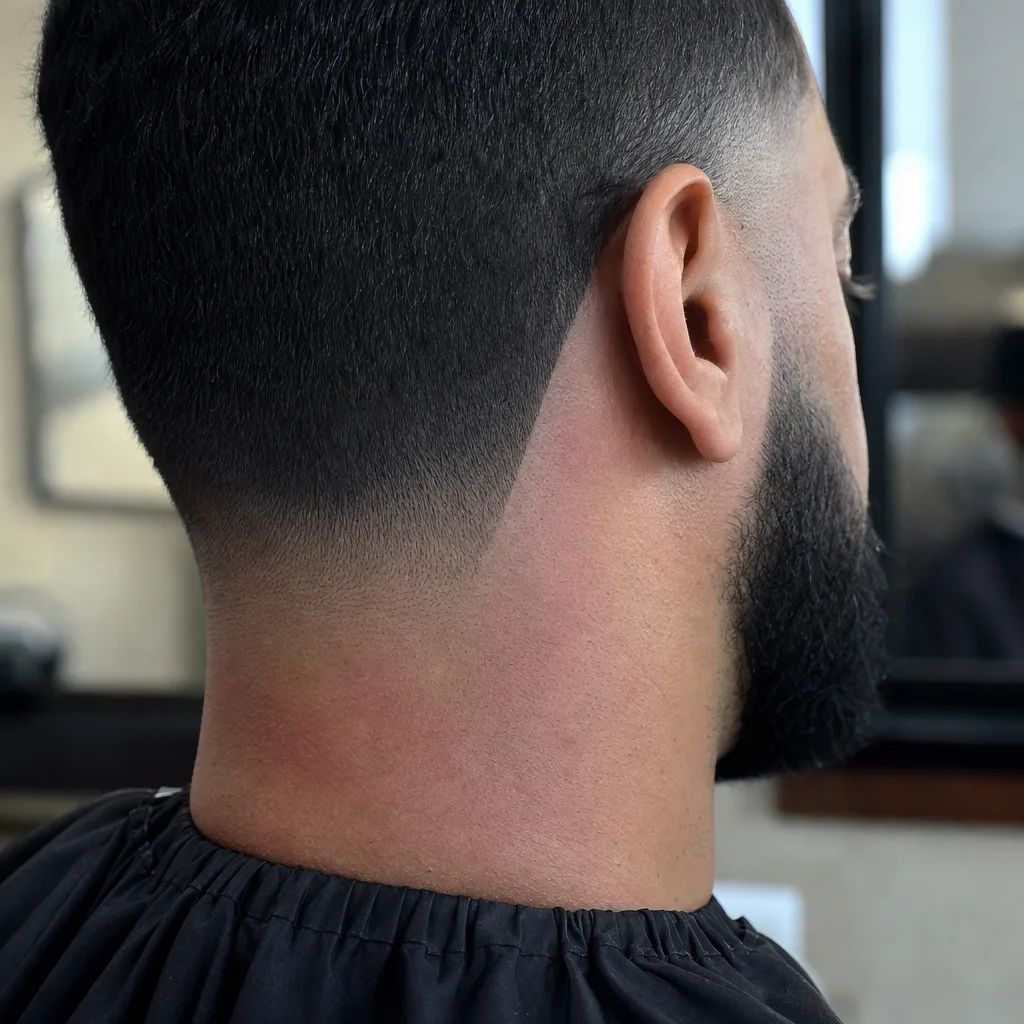
A line up or shape up cleans and sharpens the edges of your hair: the front hairline, temples, around the ears, sideburns, and the back of the neck. It doesn’t change your length on top or rebuild a fade. It keeps the cut you already have looking fresh until you’re ready for a full one.
Think of it as tracing the outline of your haircut. Your hair keeps growing everywhere, but the edges are what people notice first. A week or two after a fresh cut, the hairline gets fuzzy, the neck grows in, and the sharp look starts to fade. A line up fixes the outline without touching the rest.
Here’s what usually gets detailed:
- The front hairline, squared, rounded, or kept natural depending on your face and style
- The temples and the corners where the hairline turns down toward your ears
- Around the ears, so stray hairs don’t hang over the edge
- Sideburns, cleaned up and matched so both sides look even
- The neckline at the back, which can be blocked, rounded, or tapered
Some barbers use line up and shape up to mean the same thing. Others treat a shape up as a little more, like lightly cleaning up the sides and back along with the edges. If you’re not sure which one you need, just tell us what bugs you about your hair right now. That tells us more than the name does.
What it doesn’t include matters just as much. A line up won’t take length off the top. It won’t redo a fade that’s grown out into one solid length. If your fade has lost its blend, or your hair is getting heavy on top, a line up will make the edges crisp but the rest will still look grown in. That’s when a Fade cut or a Men’s haircut is the better call.
If you’ve got a beard, the edges where your sideburns meet your beard are part of the outline too. A full beard cleanup is its own service, though. If your beard needs shaping, a Beard trim or Haircut + beard covers that.
One thing a good line up should never do is push your hairline back. Every time someone cuts the edge a little further in to make it look sharper, the natural line creeps backward. Do that over a few months and you end up with a hairline that looks too far back, and it takes time to grow back out. A careful line up follows where your hair naturally grows. It makes it clean, not new.
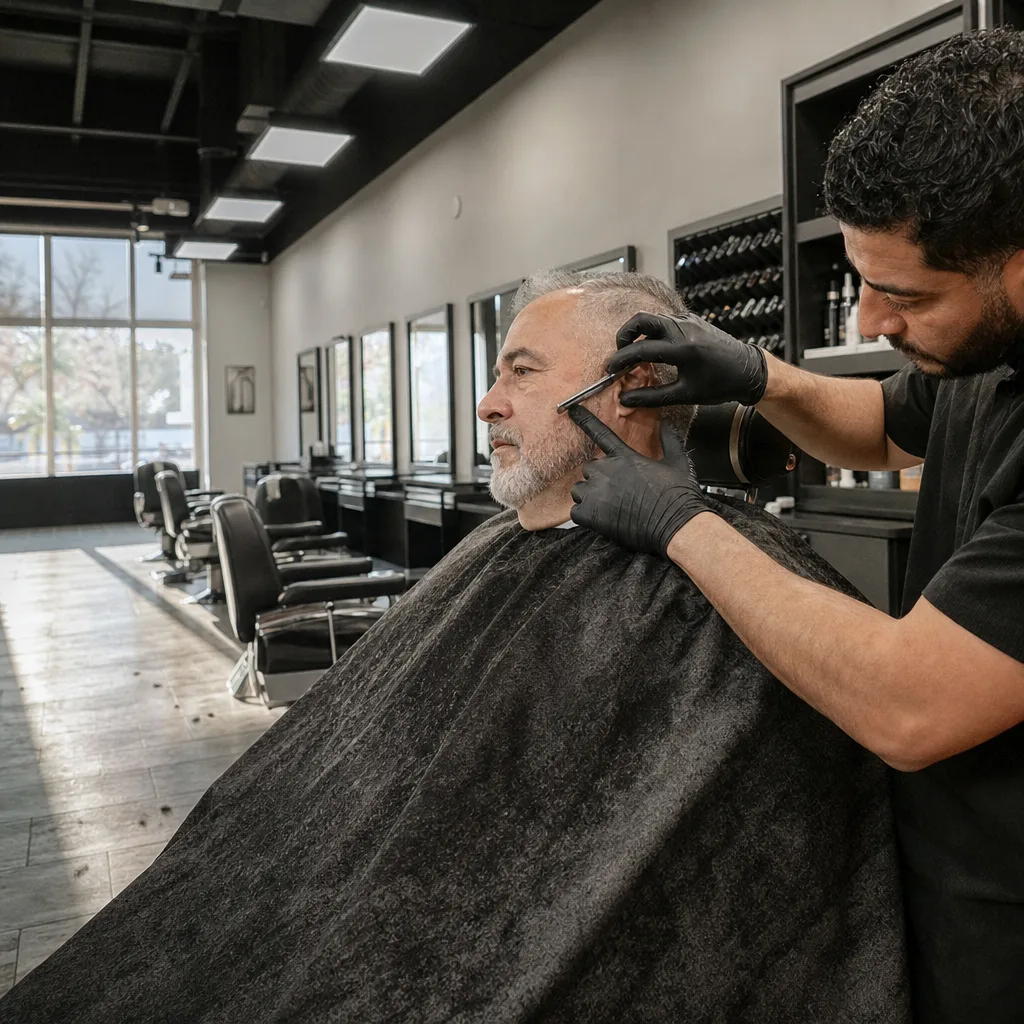
The finishing touches are what make it feel done. Here that can include a hot towel and razor work for an extra-clean edge. The razor gives the line a sharper finish than clippers alone, and the hot towel helps your skin feel calm afterward.
So if the top still looks good and only the edges look messy, a line up is usually all you need. It’s quick, it’s simple, and it buys you more time before your next full cut.
Signs It’s Time for a Touch-Up
Most people can’t say what’s off about their hair. They just know it doesn’t look as clean as it did a week ago. Nine times out of ten, that feeling comes from the edges, not the length. Here’s how to tell.
Stand in front of the mirror and check these spots:
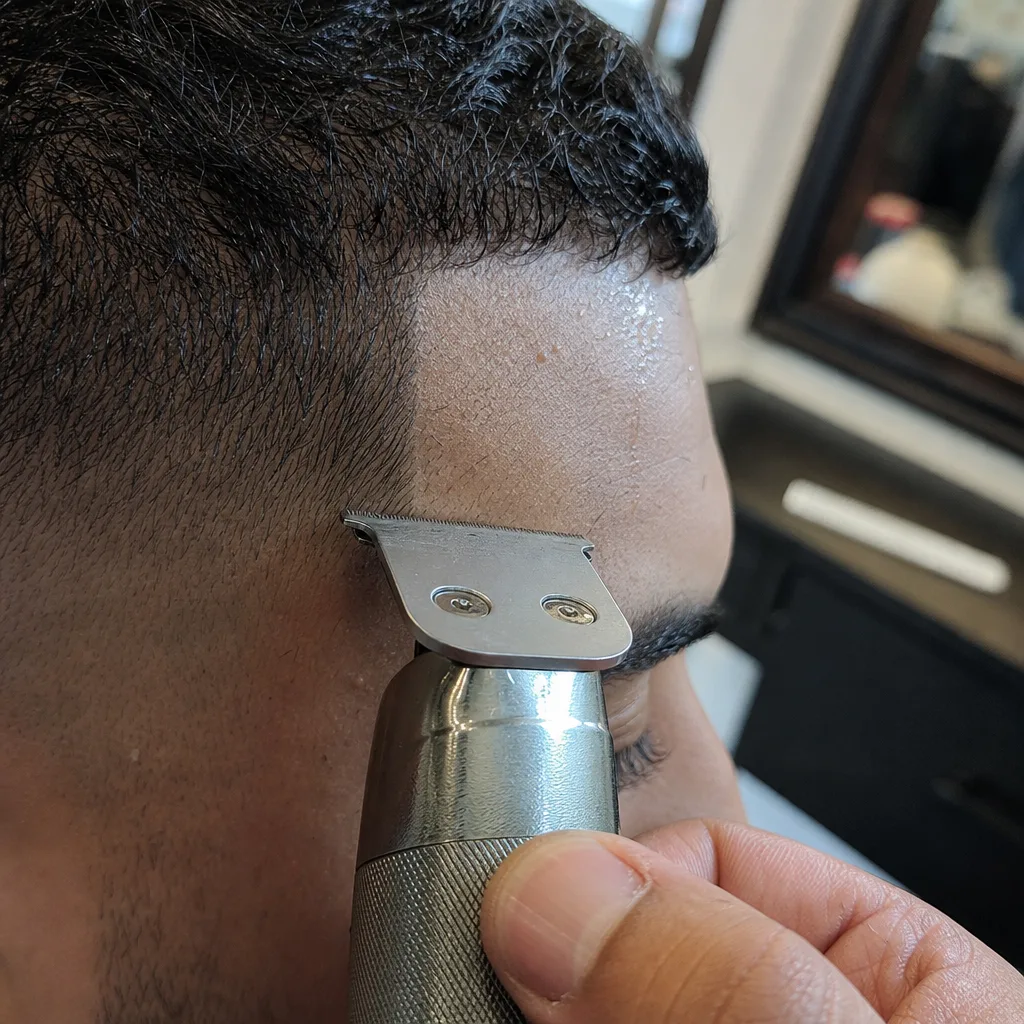
- Your hairline looks soft or blurry instead of sharp, especially at the corners near your temples.
- Little hairs are growing in front of the line, so the edge looks uneven up close.
- Hair around your ears is starting to curl over or touch the top of your ear.
- One sideburn looks longer or thicker than the other.
- The back of your neck feels scratchy, or hair is creeping down below where your neckline used to stop.
- The spot where your sideburns meet your beard has gone fuzzy and you can’t see where one ends and the other starts.
If you’re seeing two or three of those and the top still sits the way you like, you’re in line up territory. That’s the whole point of this service. It brings back the sharp look without making you wait for a full cut.
The back of the neck is the one people miss. You don’t see it in the mirror, but everyone behind you in class or in line for coffee does. Grab your phone and take a quick photo of the back. A grown-in neckline is often what makes a cut look a week older than it is.
Timing matters too. For a lot of people, the edges start to lose their shape about a week or two after a fresh cut, even when the rest still looks good. Short styles show it faster. With a tight fade or waves, even a little growth at the edge stands out.
Then there are the days you want to look put together. Being right by the University of Delaware, the calendar gives you plenty of reasons: a job interview, a career fair, a formal, graduation photos, or just heading home to see family. A line up a day or two before keeps you sharp without the full haircut you might not need yet.
When you don’t need one yet: If you got a cut just a few days ago and the edges still look clean, wait. Edging too often is how a hairline gets pushed back, which we covered above. Give it time to grow in a bit first.
And sometimes a line up isn’t enough. If your fade has grown into one solid length, the top feels heavy, or your hair won’t sit right no matter what you do, the problem isn’t just the outline. Sharp edges on a grown-out cut still look grown out. That’s the moment to book a Fade cut or a Men’s haircut instead.
A simple rule works for most people. If you like your cut but it looks messy around the outside, get a line up. If you’re tired of the cut itself, get a full one. Not sure which camp you’re in? Book the full cut. If it turns out you only need the edges, a shorter visit means more time between appointments.

Professional Line Up vs. DIY Touch-Ups
You can do some of this yourself. Plenty of guys keep a trimmer in the bathroom drawer, and that’s fine. The real question isn’t whether you can touch up your edges. It’s which edges you should touch.
Here’s what’s usually safe to handle at home:
- Stray hairs on your neck that are clearly below where your neckline used to stop
- A few hairs curling over the top of your ears
- Fuzz on your cheeks above where your beard line sits
- Keeping things tidy for a few extra days until your next appointment
The trick is to clean up only what’s obviously out of place. Stay below the old line and don’t try to create a new one. If you’re only taking off what grew in, it’s hard to mess up.
Here’s what’s better left to a barber:
- The front hairline. It’s right in the middle of your face, so one slip shows. It’s also where the push-back problem we covered earlier starts.
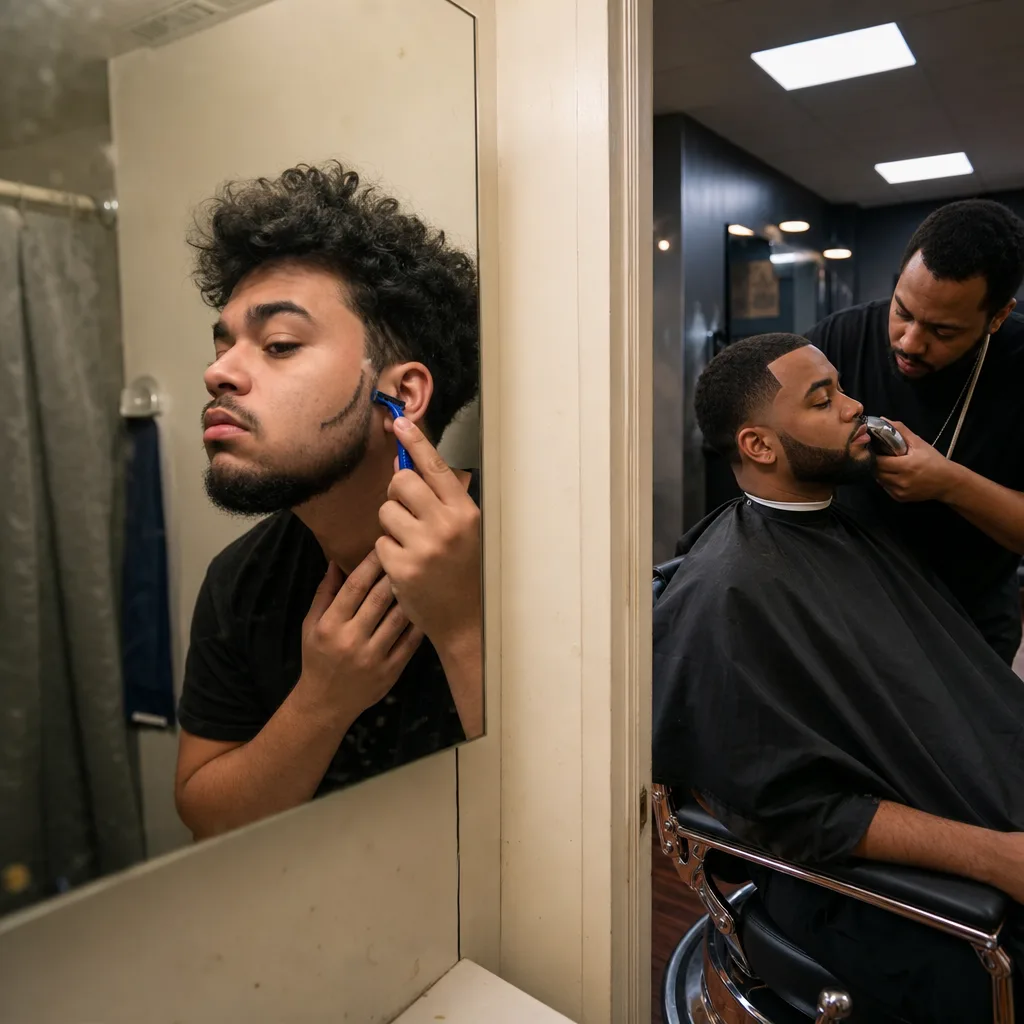
- The temple corners. They need to match on both sides, and that’s tough to judge when you’re looking at yourself backward in a mirror.
- Sideburns. Getting both sides even by yourself is harder than it looks. Most people end up taking a little more off one side, then the other, until both are too short.
- The back neckline shape. You can clean stray hairs, but blocking or rounding the line takes a second set of eyes and a steady angle you just can’t get by yourself.
Picture this. It’s the night before a career fair. You notice your hairline looks soft, so you grab the trimmer and go for it. The left side looks good. The right side ends up a little higher, so you even it out. Now both sides sit back further than they should, and you’ve got to live with it for weeks while it grows in. That’s the most common way a DIY edge goes wrong. It’s not one big mistake. It’s chasing small ones.
There’s also the finish. A home trimmer can get you close, but it won’t give you the same crisp edge as razor work. Here, a line up can include a hot towel and razor finish, which looks sharper than clippers alone and leaves your skin feeling calmer afterward. That’s the difference between “cleaned up” and “fresh.”
A good way to split it is simple. Use your trimmer for the neck and the strays between visits. Leave the front, the corners, and the sideburns for your line up. That way your edges stay clean, your hairline stays where it belongs, and you’re not starting over every time you get a little too confident in the mirror.
If the spots that bug you are the ones on the second list, that’s your sign. We’re appointment-only, right by the University of Delaware, so book your line up through Booksy and let us handle the edges you can’t see well.
What Drives the Price of a Line Up or Shape Up
A line up usually costs less than a full haircut. That’s the basic rule at most barbershops. You’re paying for the edges, not a full cut and blend. A few things can still move the price up or down, and it helps to know them before you book.
Here’s what usually makes the biggest difference:
- How much is included. A basic line up covers the hairline, temples, ears, sideburns, and neck. If the shop treats a shape up as a little more, like a light cleanup on the sides and back, it can be priced a bit higher.
- How grown in you are. Edges that are two weeks out take less time than edges that are five weeks out. Once the outline is gone, rebuilding it takes longer.
- Your beard. If the line runs from your sideburns into your beard, the barber has more edge to work. A full beard shape is a separate service, like a Beard trim or Haircut + beard.
- Finishing touches. Razor work and a hot towel take extra time. Some shops include them and some charge for them as add-ons. It’s worth asking.
- Where the cut happens. Coming to the shop is the standard setup. A House call means the barber travels to you, and across the industry that usually costs more than an in-shop visit.
Hair type matters a little too. Tight curls, coarse hair, and very short styles show every line, so the edge needs more care to look even. That doesn’t always change the price, but it’s part of why a line up is skilled work and not just a quick buzz.
Here, a line up can include a hot towel and razor work to finish the edge. That’s a big part of what you’re getting. A clipper-only edge can look clean from across the room. A razor finish still looks sharp up close.
The cheapest choice isn’t always the one that saves you money. A line up between full cuts can stretch the time before you need your next Fade cut or Men’s haircut. If the top still looks good, paying for only the edges every so often can cost less over a semester than booking a full cut every time you feel messy.
On the other hand, if your fade has grown out, paying for a line up won’t fix it. You’ll leave with sharp edges on a cut that still looks old, and you’ll be back soon for the full cut anyway. Match what you pay for to what’s bugging you.
Before you book anywhere, these questions will save you a surprise at the chair:
- Does the line up include the neck and sideburns, or only the front?
- Is razor work part of it, or is it extra?
- Is the beard line included, or does that count as a beard service?
- Is a shape up priced differently from a line up?
Clear answers to those tell you what you’re paying for. We’re appointment-only near the University of Delaware, and every visit is booked through Booksy, so you can pick the right service before you show up.
What to Expect During Your Appointment
Booking comes first. We’re appointment-only, so there’s no walk-in line to wait in. Every visit is booked through Booksy. Pick Line up / shape up if the top still looks good and only the edges are messy. Pick a full cut if the cut itself has grown out. That one choice sets how much time you’re booked for.
The shop is at 119 S Main St, Unit 102, in Newark, right by the University of Delaware. Here’s the part that trips people up the first time:
- Park behind the shop in the spaces marked Creator Studios.
- Come in through the back door, not the Main Street side.
- Show up on time. With appointments booked back to back, a few minutes matters.
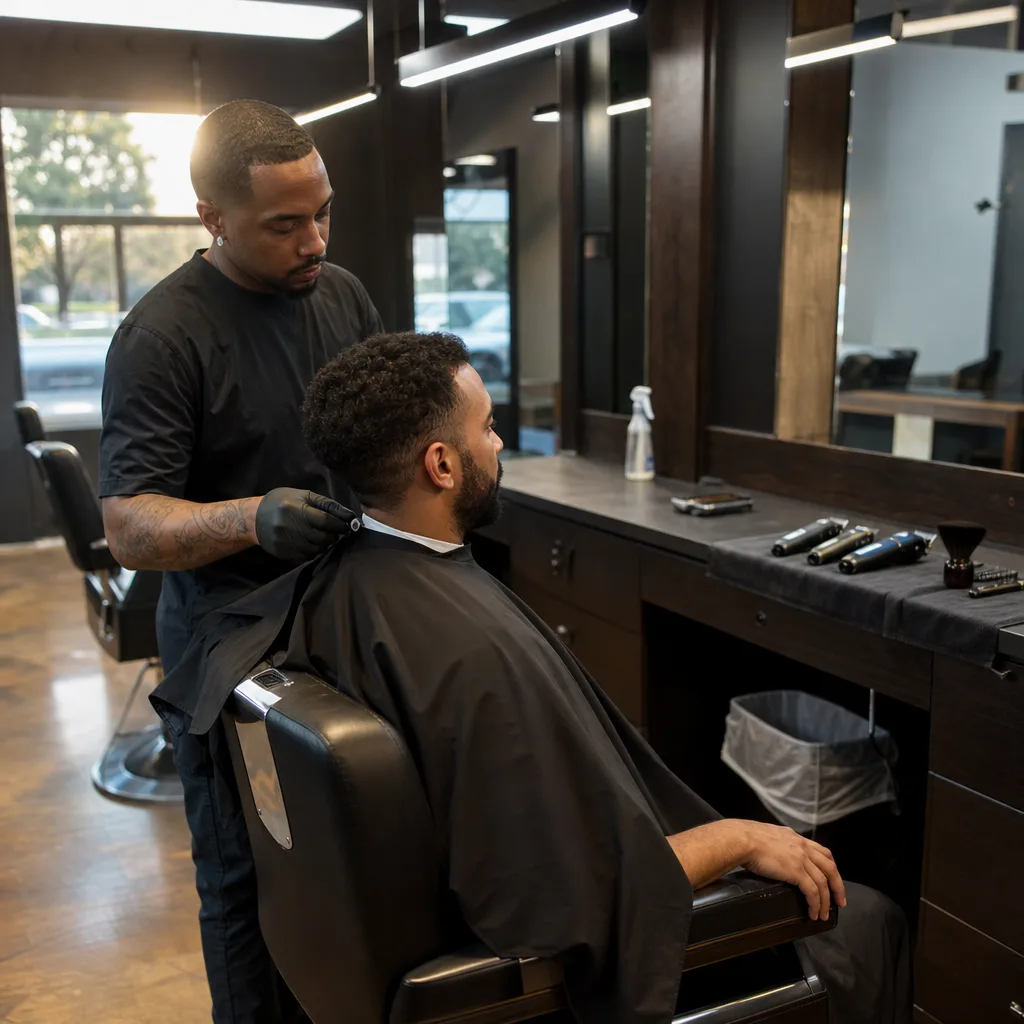
You’ll always be in the same chair with the same barber. The owner is the only barber here. He takes the appointments and does every cut himself. So the person who edged your hairline last time is the one doing it this time. That matters for a line up more than most services. Your natural hairline stays where it belongs when the same hands follow the same line each visit, instead of a new barber guessing where it used to sit.
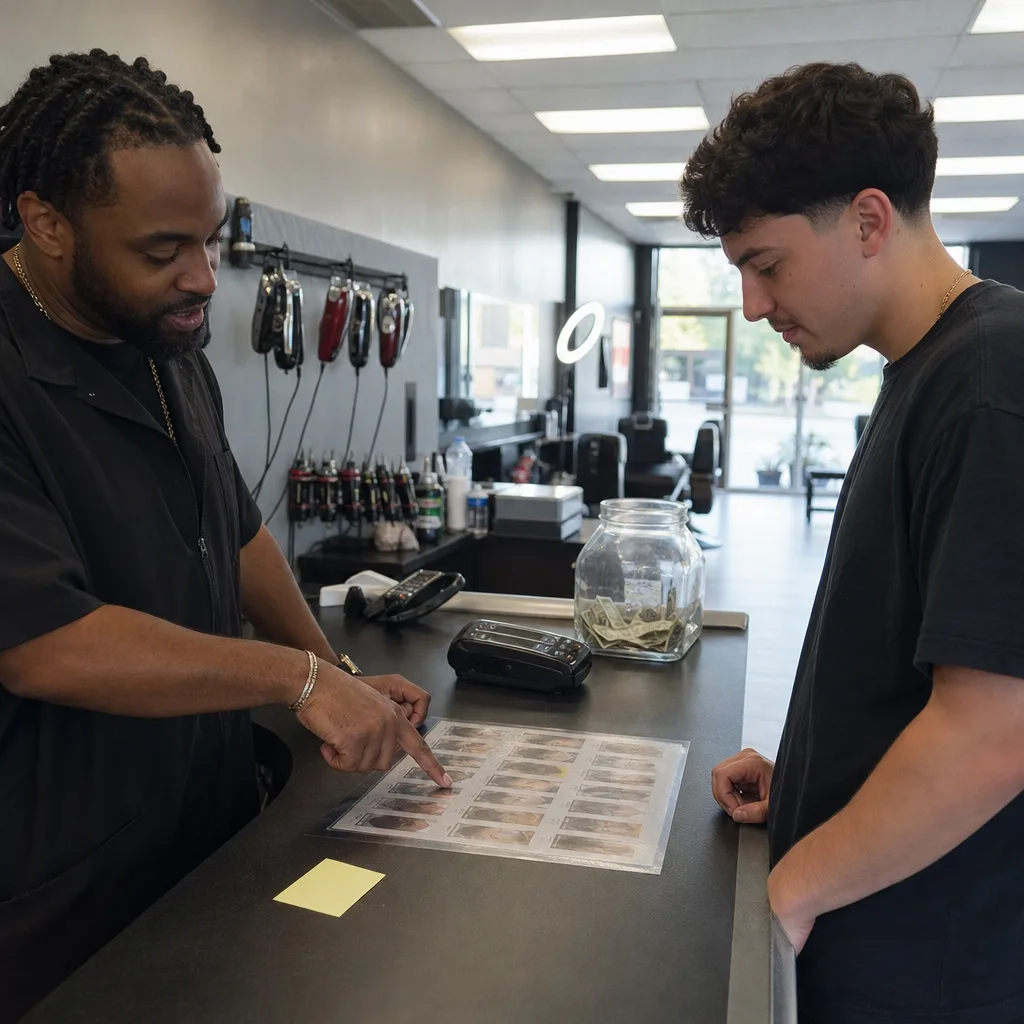
Before he starts, say what’s bugging you. Fuzzy temples? A neckline creeping down? One sideburn longer than the other? Be specific. If you like your line squared, rounded, or kept natural, say so. A photo of your hair on a day it looked right helps a lot.
A line up usually goes in this order:
- A quick look at where your hair naturally grows, so the edge follows it.
- Clipper or trimmer work to clean up the hairline, temples, ears, and sideburns.
- The neckline at the back, shaped the way you like it.
- Finishing touches. Here that can include razor work for a sharper edge and a hot towel to calm your skin.
It’s a shorter visit than a full cut. You’re not getting the top cut or a fade rebuilt. That’s what makes it easy to fit between classes.
A couple of things make it go smoother. Don’t edge your hairline yourself the night before. Tell him if you’ve been trimming at home, even just the neck, so he knows what he’s working with. And if you’ve got a beard, mention whether you want the sideburn-to-beard line cleaned up. A full beard shape is a separate service, so it helps to know ahead of time.
Before you get up, take a look in the mirror. Check both temples and both sideburns side by side. If something looks off, say it right then. It’s a lot easier to fix in the chair than after you’ve left.
If your cut still looks good and it’s just the edges letting you down, open Booksy and book your line up. Park behind the shop in the Creator Studios spaces, come in the back door, and you’ll walk out looking fresh again.
What does it mean to shape up your hair?
Shaping up means sharpening the outline of a cut you already have, not changing the length on top. It cleans the hairline, temples, ears, sideburns, and neckline so the style you got last time looks fresh again. Some barbers use shape up and line up as the same service, while others treat a shape up as a bit more, like a light cleanup on the sides along with the edges. Either way, it’s meant to carry your current cut forward, not replace it.
Is a line up cheaper than a full haircut?
Yes, a line up usually costs less than a full haircut because it only touches the edges, not the whole head. You’re paying for cleanup on the hairline, temples, ears, sideburns, and neck, not a full cut and blend. The price can shift a bit based on how grown in your edges are and whether razor work or a hot towel finish is included. If your fade has grown out and the top feels heavy, a full cut will serve you better than paying for edges alone.